
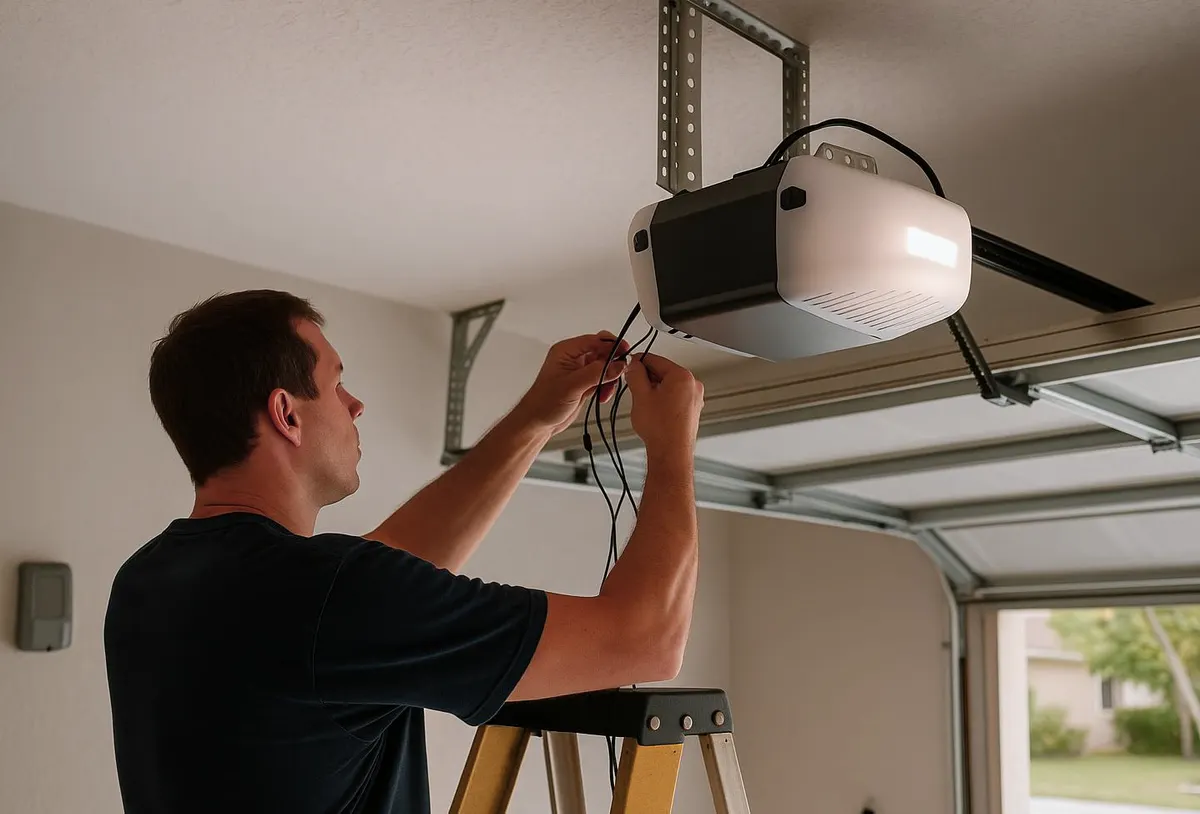
If your garage door opened and closed smoothly all October, a one-hour check-up now is usually all it needs before the cold sets in. The exceptions: a door that's already grinding, sagging, or slow to respond, a torsion spring older than 10-12 years, or a garage that stays noticeably colder than the rest of the house. Those situations deserve a real inspection, not just a weekend tune-up, because once temperatures drop and stay down, small problems get worse fast and parts get harder to source on short notice.
Check the Weatherstripping First
The rubber seal along the bottom of the door and the strips along the sides are the first line of defense against wind-driven snow and the cold air that settles in once overnight lows drop into the teens and twenties. Over a Toledo summer, UV exposure and humidity make this rubber brittle and prone to cracking. Walk around the door with a flashlight from inside the garage during daylight — any visible light coming through gaps means air (and eventually meltwater) is getting in.
- Bottom seal: look for flattening, cracking, or sections pulled away from the track.
- Side and top seals: check for gaps at the corners where doors are most prone to warping.
- Replacement strip is inexpensive and a reasonable DIY job if the track it sits in isn't damaged.
Lubricate Before the Cold, Not During
Grease and oil thicken in cold weather, and hardware that's already dry will seize up faster once temperatures swing below freezing. Hinges, rollers, and the torsion spring itself should get a light coat of a garage-door-specific lithium grease — not WD-40, which is a cleaner/degreaser and actually strips lubrication over time. Do this now while it's still comfortable to work outside, rather than waiting until the first ice storm when you're troubleshooting a door that won't budge.
Springs Work Harder in the Cold
Torsion springs lose a bit of flexibility as temperatures drop, which means the opener has to work harder to lift the same door. If your door has felt slightly heavier or slower to open over the last few weeks, that's often the first sign a spring is nearing the end of its life rather than something being wrong with the opener. Springs are rated by cycle count, and a spring that was already due for replacement in spring or summer is far more likely to fail on the coldest day of the year, usually without warning. This isn't a DIY repair — torsion springs are under extreme tension and need a trained technician.
Test the Opener's Force and Limit Settings
Cold-stiffened springs and slightly contracted metal tracks can throw off an opener's force settings, which is why doors sometimes reverse unexpectedly in winter or struggle to fully close. Run the auto-reverse safety test: place a 2x4 flat on the ground where the door closes, and the door should reverse immediately on contact. If it doesn't reverse, or if it's reversing without touching anything, the force settings need adjustment before they become a safety issue rather than just an annoyance.
Protect the Track From Ice and Road Salt
Melting snow that drips off a car and refreezes in the track is one of the most common winter garage door headaches in this area. Salt and brine tracked in on tires accelerates rust on tracks, rollers, and the bottom of steel doors. A few habits make a real difference:
- Wipe down the bottom few feet of the track monthly during salt season.
- Keep a push broom handy to clear slush before it has a chance to refreeze overnight.
- Rinse the lower door panel occasionally to reduce salt buildup, the same way you'd rinse a car's undercarriage.
Think About the Garage Itself, Not Just the Door
Many homes in this area have attached garages that share a wall with living space, and an uninsulated door can make that wall noticeably colder in January. If you're tired of a garage that never warms up, or pipes along that shared wall have come close to freezing in past winters, an insulated door panel or adding a retrofit insulation kit to an existing door are both reasonable options to weigh against a full door replacement.
When to Call Toledo Garage Door Pro
If the weatherstripping is too far gone to simply pull and replace, if a spring looks worn or the door feels noticeably heavier than it used to, or if the auto-reverse test fails, it's time to get a technician out rather than wait for a storm to make the decision for you. Toledo Garage Door Pro handles spring replacement and garage door opener service for homes and businesses across Toledo, Sylvania, Maumee, Perrysburg, Oregon, Rossford, Holland, and Waterville, and can usually get a technician out quickly once the first real cold snap hits and calls pick up. A seasonal maintenance visit covers lubrication, hardware checks, and force adjustments in one trip, so you're not troubleshooting a frozen door on a morning you need to get to work.
If you're searching for a garage door company in Toledo, OH before winter really sets in, call Toledo Garage Door Pro for a fall check-up or same-week repair — it's a lot easier to fix a sticking spring in November than a seized one in January.